- Flooring
Solid vs. Engineered Hardwood: A Montana Homeowner’s Decision Guide
July 27, 2026
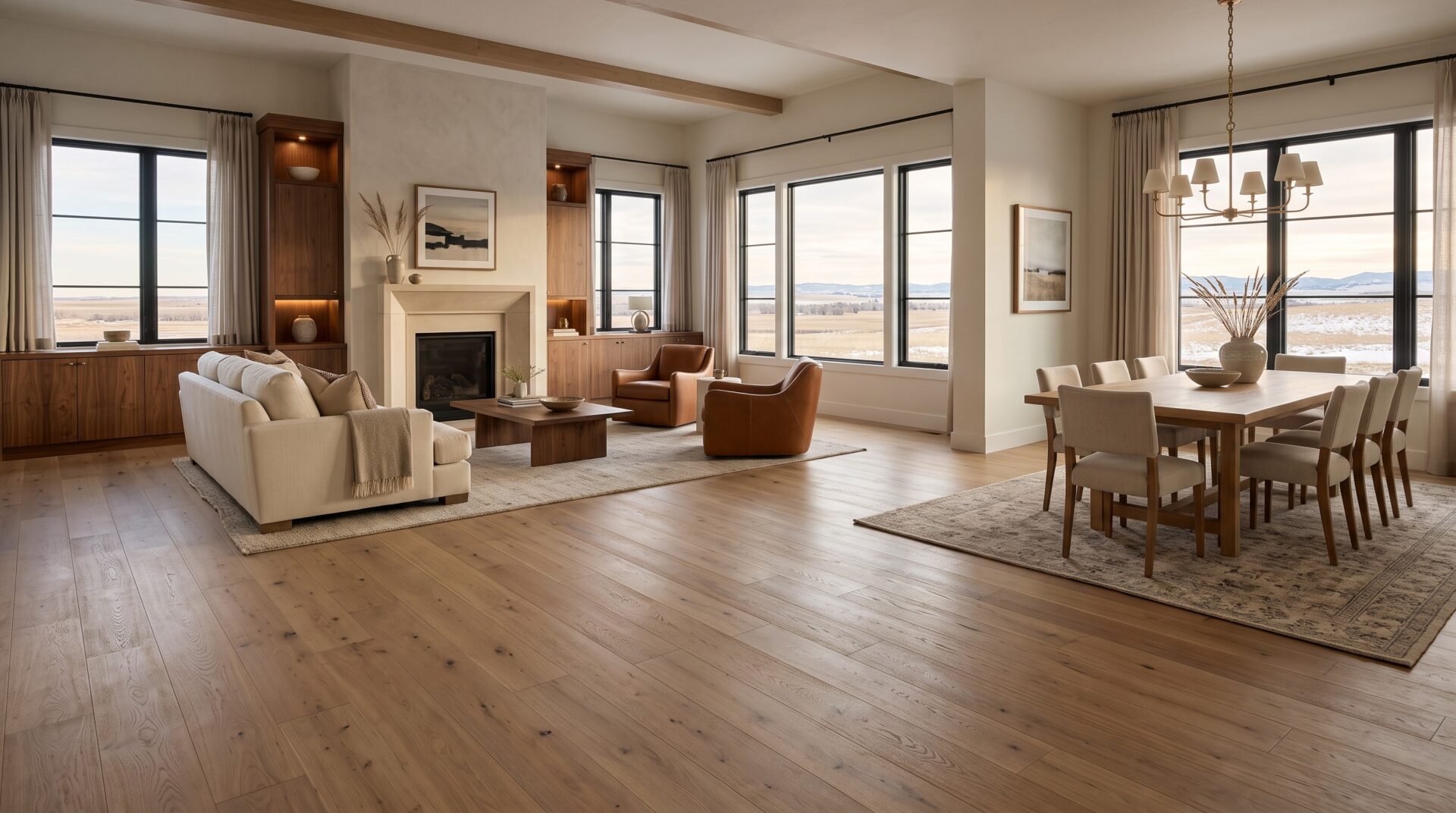
Most flooring guides treat the solid vs. engineered hardwood decision as a lifestyle question. Style preference, budget, and resale value all matter. But in Great Falls, there is a third factor that changes the answer for some rooms: Montana’s climate. This solid vs. engineered hardwood comparison exists because the two products respond very differently to chinook humidity swings, dry winters, and the kind of subfloor conditions that come with Montana’s glacial clay soils.
Here is what each product actually is, where each one holds up in a Great Falls home, and how to make the right call before anything goes to the subfloor. For a free consultation and samples from the brands we carry, visit Pierce Flooring Wholesale Direct at 1204 7th St S or call (406) 727-3832.
Key Takeaways
– Both solid and engineered hardwood have a genuine wood surface. Engineered hardwood uses a real wood veneer, not a photographic layer, which is what separates it from laminate.
– Montana’s chinook events collapse indoor RH to 20-25% in winter and push it back to the mid-40s in summer. Solid hardwood’s all-wood core responds to every point of that swing; engineered hardwood’s cross-ply core resists it.
– Solid hardwood can be sanded and refinished more times over its lifetime. Engineered hardwood’s refinishability depends on veneer thickness, typically 2 to 6mm for residential products.
– Engineered hardwood can be installed in basements with proper moisture conditions; solid hardwood cannot go below grade.
– Pierce Flooring Wholesale Direct in Great Falls carries DuChateau, Kahrs, Hallmark Floors, and Anderson Tuftex engineered hardwood, and offers free in-home measurements and design consultations.
What Is the Actual Difference Between Solid and Engineered Hardwood?
Solid hardwood is exactly what it sounds like: a plank milled from a single piece of wood, typically 3/4 inch thick. Every dimension of that plank is subject to expansion and contraction as humidity changes. In a climate like Great Falls, where indoor RH can swing 20 to 25 percentage points between winter and summer, solid hardwood is always moving. It gaps in the dry cold months and expands back as humidity rises.
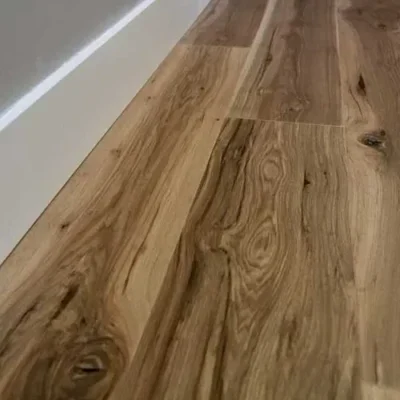
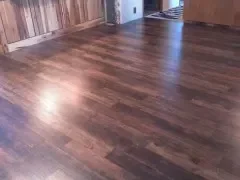
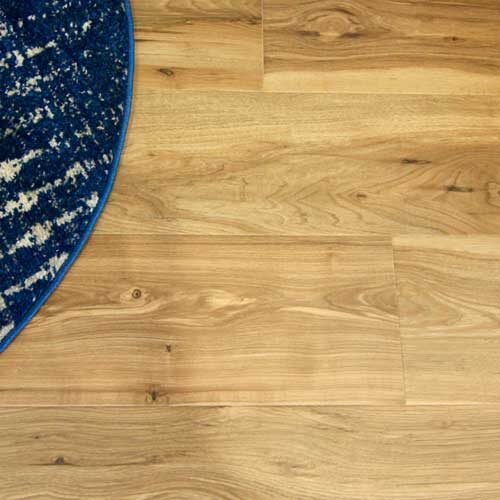
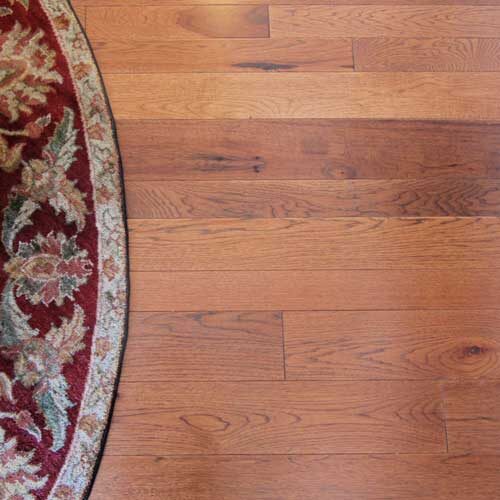
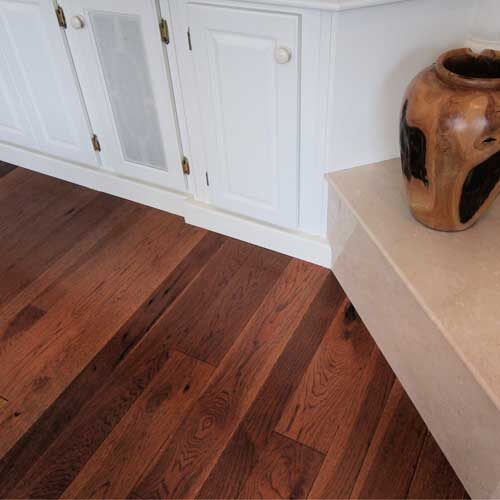
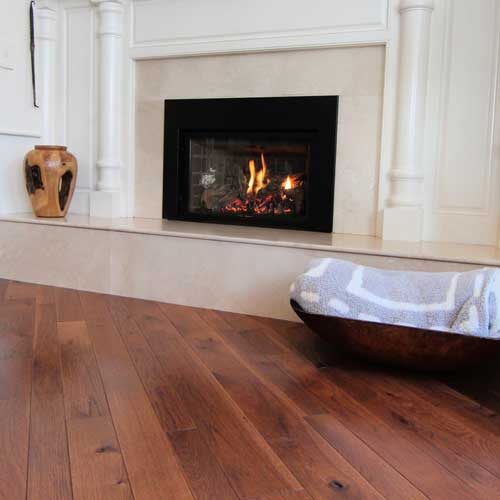
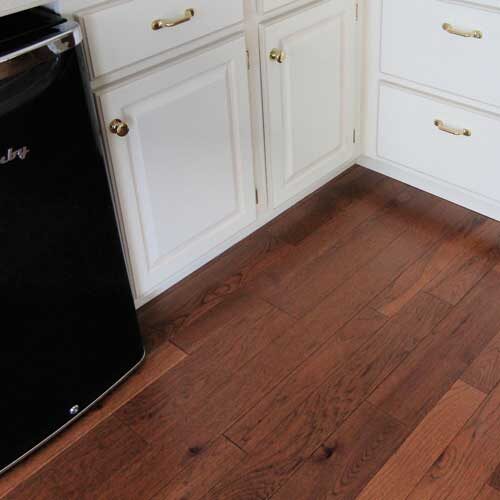
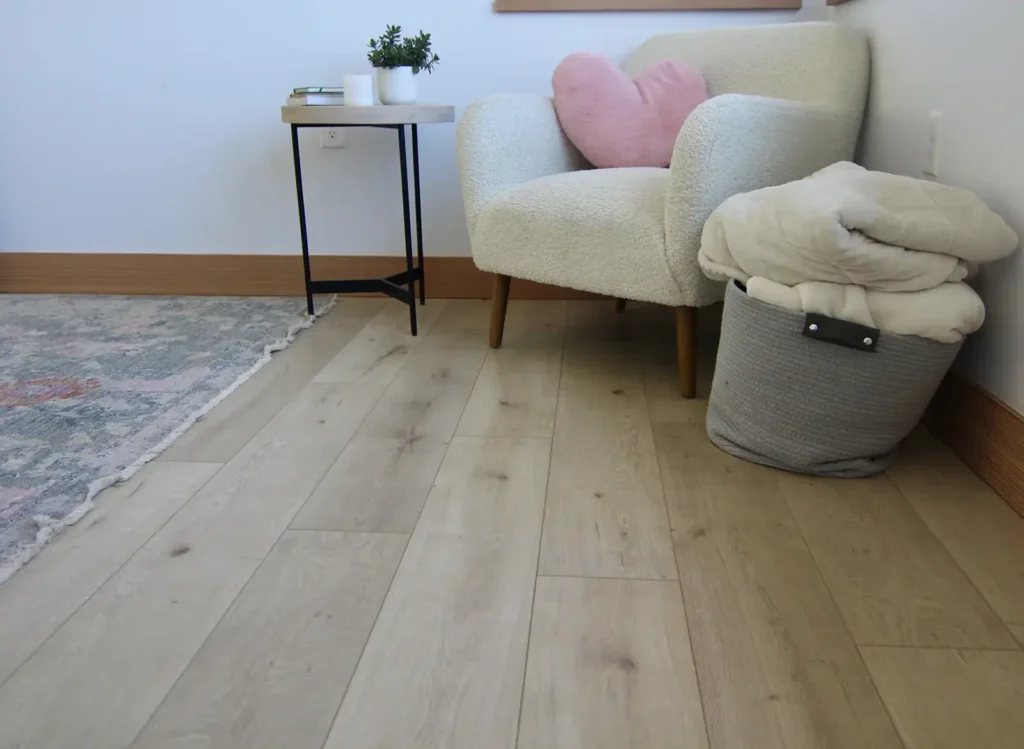
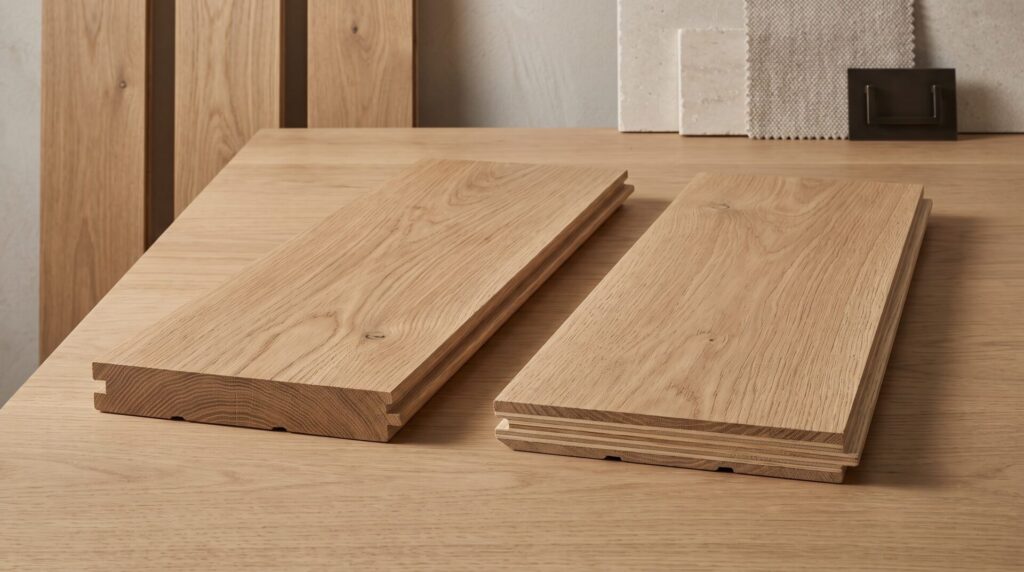
Engineered hardwood uses the same species and surface appearance as solid hardwood, but the construction is different. A real wood veneer, anywhere from 2 to 6mm thick depending on the product, sits on top of a cross-ply core made of plywood or HDF layers. Those alternating layers run perpendicular to each other, limiting dimensional movement in the way a single slab of wood cannot. The surface is real hardwood. The stability underneath is structural engineering.
This is what separates engineered hardwood from laminate, which uses a photographic image of wood printed onto fiberboard. Engineered hardwood can be sanded, stained, and refinished. Laminate cannot. The comparison here is two products that both qualify as real hardwood, with meaningfully different performance under stress.
Why Does Montana’s Climate Favor Engineered Hardwood in Most Spaces?
Solid hardwood needs interior RH to stay between 30 and 50 percent to perform as intended. The National Wood Flooring Association publishes this range as the standard maintenance condition for wood floors. Great Falls winters regularly push below that range, sometimes to 20 to 25 percent, and chinook events can move that number in hours rather than weeks.
That speed matters. Slow seasonal humidity changes give a solid hardwood floor time to adjust. A chinook arriving in January can collapse the room’s RH in a day. The wood contracts faster than the expansion gaps can accommodate. The result is gapping, potential cracking, and in severe cases, the buckling that results when the floor rehydrates just as fast in the other direction.
Engineered hardwood’s cross-ply construction resists that movement. The alternating grain directions in the core layers work against each other’s natural tendency to expand and contract, limiting the net movement across the plank. In a Great Falls home, this is not a marginal advantage. It is what allows you to use hardwood in rooms where solid wood would face repeated stress from the climate.
“In over 100 years of flooring in Montana, we have seen what these chinook swings do to solid hardwood that was installed without accounting for the climate. I always walk customers through the humidity data before we talk about which species or finish they want. The installation environment has to come first.”
– Larry Evaro, Store Manager, Pierce Flooring Wholesale Direct
“Absolutely excellent people, especially Phil Mahoney. Great deal, super honest, helped us all of the way through.”
– Jose I. G., Great Falls, MT
Where Does Each Product Work Best in a Great Falls Home?
The right product depends on the room and the conditions in that room, not on a blanket preference for one type over the other.
Engineered hardwood is the better choice in: main floor living rooms and dining rooms with open plans and exterior doors; basements, with proper moisture testing and a vapor barrier confirmed by a professional (check the specific product’s grade compatibility before installing); any room over a crawl space with variable subfloor humidity; and spaces where a radiant heating system is present, as engineered hardwood handles the temperature cycles radiant systems create better than solid wood in most cases.
Solid hardwood works well in: bedrooms and upper-floor rooms with consistent indoor climate far from exterior doors; formal dining rooms or office spaces where the HVAC maintains stable RH; and homes where the priority is maximum refinishability over decades, and the homeowner commits to running a whole-house humidifier to keep winter RH above 35 percent.
The honest truth: for most Great Falls homes, engineered hardwood is the lower-risk choice in the most rooms. It does not sacrifice the look or feel of real wood. What it sacrifices is one or two refinishing cycles over 50 years, which most homeowners will never use anyway.
“When customers tell me they want solid hardwood because it feels more authentic, I agree with them that the aesthetic is the same. Then I ask them about their humidifier situation and their mudroom. Those two questions usually tell us whether solid or engineered is right for their specific house.”
– Phillip Mahoney, Flooring Specialist, Pierce Flooring Wholesale Direct
“Absolutely fabulous customer service. The salesman helped me look for a remnant piece and was extremely helpful. Would recommend.”
– Anonymous, Great Falls, MT
What About Refinishing and Long-Term Value?
Solid hardwood has one clear advantage: it can be sanded and refinished more times. A 3/4-inch solid hardwood plank typically allows five to seven refinishings over its lifetime, depending on how aggressively each sanding is done. That longevity is real, and it is a legitimate reason to choose solid hardwood in a room where the climate is well-controlled.
Engineered hardwood’s refinishability depends on veneer thickness. A 2mm veneer typically allows one or two careful sandings. A 4mm to 6mm veneer allows three to five. The thicker engineered hardwood products from brands like DuChateau and Kahrs, which Pierce Flooring Wholesale Direct carries in Great Falls, are designed with this in mind. If refinishability over decades matters to you, ask about veneer thickness before you commit to a specific product.
Browse the engineered and solid hardwood options available at pierceflooringwholesale.com/flooring/hardwood/. If you have questions about specific product specs or have already dealt with a buckling or moisture issue, our article on hardwood floor buckling in Great Falls covers the Montana climate context in detail.
Which Should You Choose for Your Great Falls Home?
For most rooms in most Great Falls homes, engineered hardwood is the right call. Montana’s humidity range is simply outside what solid hardwood handles comfortably without active climate management. Engineered hardwood gives you everything solid wood delivers at the surface, with a core built to absorb the stresses the solid product cannot.
If your home has consistent indoor climate, you run a whole-house humidifier that keeps winter RH above 35 percent, and your priority is maximum refinishability over decades, solid hardwood is a valid choice for the right rooms. We carry solid hardwood at Pierce Flooring Wholesale Direct in Great Falls and can walk you through which species and grades are best suited to Montana conditions.
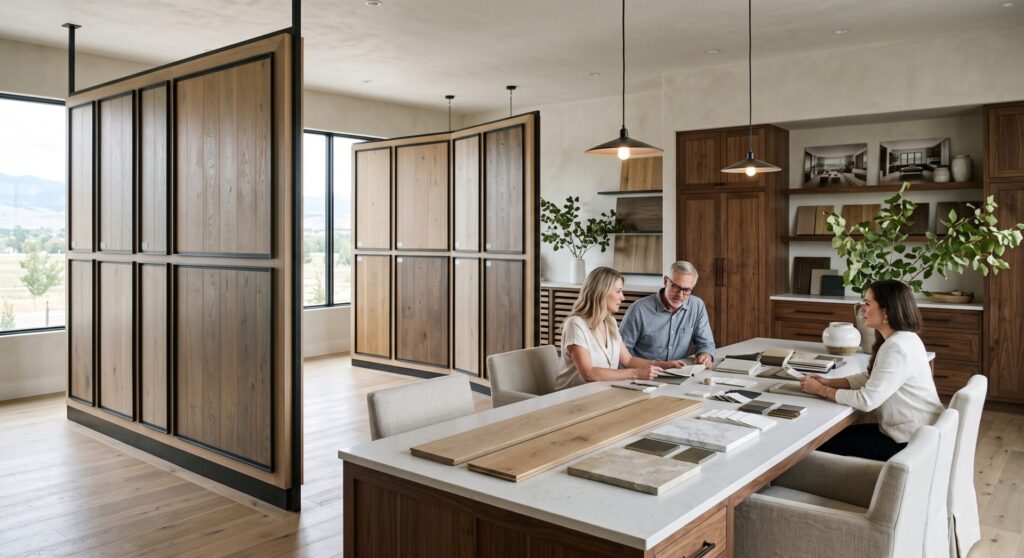
Stop in at 1204 7th St S in Great Falls, call (406) 727-3832, or toll-free at (800) 893-7975. Our team offers free design consultations and free in-home measurements. Learn about the Pierce Promise and what it means when you buy from Montana’s largest flooring dealer.
Pro Tip from Pierce Flooring Wholesale Direct in Great Falls:
Whichever product you choose, acclimation before installation is not optional in Montana. Both solid and engineered hardwood need to sit in the installation space at the room’s expected temperature and humidity for a minimum of 72 hours before installation begins. In Great Falls, where a chinook can shift the interior climate between delivery and install day, give it the full week if possible. Boards installed before they have reached equilibrium with the room will move after installation, no matter how good the product is. Ask your Pierce Flooring Wholesale Direct specialist about acclimation requirements for the specific product you select.
Frequently Asked Questions: Solid vs. Engineered Hardwood in Montana
Is engineered hardwood real wood?
Yes. Engineered hardwood has a genuine wood veneer on the surface and can be sanded and refinished. It is not a photographic image like laminate. The difference is in the core construction, not the surface material.
Can engineered hardwood handle Montana’s humidity swings better than solid hardwood?
Yes, in most cases. Engineered hardwood’s cross-ply core limits the dimensional movement that Montana’s chinook events and dry winters cause in solid hardwood. The NWFA recommends maintaining 30 to 50 percent RH for all wood floors, a range Great Falls homes fall below in winter. Engineered hardwood handles excursions outside that range better than solid wood.
Can I install engineered hardwood in my Great Falls basement?
Engineered hardwood can be installed below grade in Great Falls with proper subfloor moisture testing and a vapor barrier, and only in products rated for below-grade installation. Solid hardwood cannot go below grade at all. Check the specific product’s grade compatibility before committing to a basement installation.
How many times can engineered hardwood be refinished?
Refinishability depends on veneer thickness. Engineered hardwood with a 2mm veneer typically allows one to two careful sandings. Products with 4 to 6mm veneers, such as those from DuChateau and Kahrs, allow three to five refinishings. Ask Pierce Flooring Wholesale Direct about veneer thickness when comparing specific products.
Does solid hardwood add more value to a home than engineered hardwood?
In most Montana markets, both products are appraised similarly because both have a genuine hardwood surface. The real value difference is longevity: a solid hardwood floor maintained well for 50 to 75 years may survive multiple refinishes that extend its life beyond most engineered products. In Great Falls homes where climate management is strong and rooms are protected from direct moisture exposure, solid hardwood in the right spaces can be a sound long-term investment.
You Might Also Like
-
- Flooring
September 16, 2026
Commercial Flooring in Great Falls: What Montana Businesses and Property Managers Need
-
- Flooring
August 26, 2026
Best Flooring for Great Falls Basements: Moisture, Climate, and What Actually Works
-
- Flooring
August 16, 2026
Fall Flooring Prep: How to Get Your Great Falls Home Ready for Winter
Need Quality Flooring at Wholesale Prices?
Get in touch today and let’s find the right solution for your next project.