- Flooring
Why Is My Hardwood Floor Buckling? Montana Causes and What to Do Next
July 22, 2026
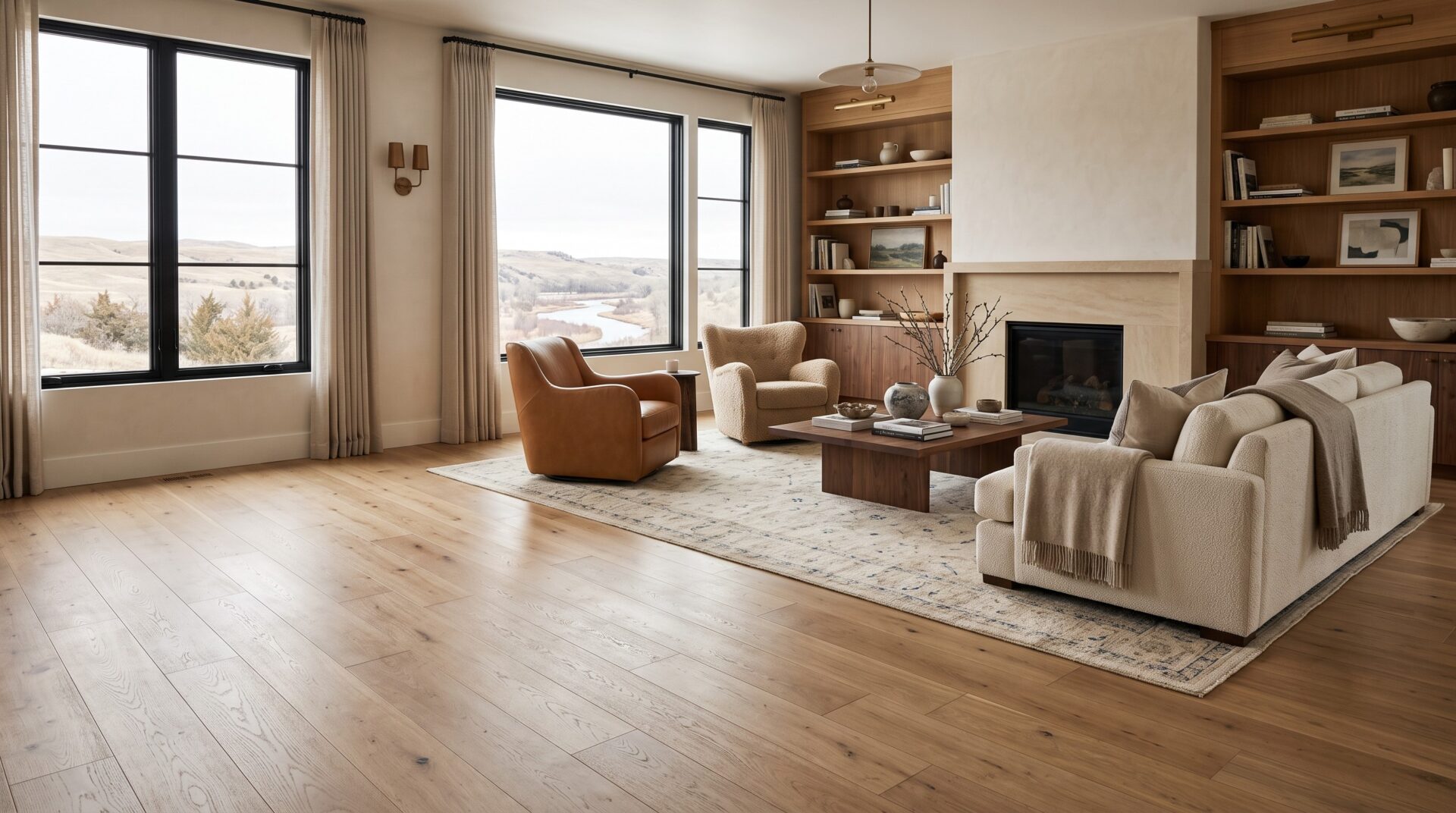
Your hardwood floor was fine last fall. Now there’s a ridge running down the middle of the living room and boards near the window are lifting off the subfloor like something pried them from below. Nobody warned you this could happen.
Hardwood floor buckling in Great Falls happens more than most homeowners expect. Not because the floors are bad. Because Montana’s climate puts hardwood through conditions most product specs were never designed to handle. Here’s what’s actually going on, what caused it, and what to do next. If you’re dealing with this right now, a local specialist is your best resource. Call us at (406) 727-3832 for a free consultation. A national big-box store can sell you a replacement; only a team that has spent winters here can tell you why your particular floor buckled and what will actually hold up next time.
Why Great Falls Is Harder on Hardwood Than Most of the Country
Most flooring articles talk about humidity as if it’s a simple number. High humidity causes cupping; low humidity causes gapping. That’s true. What those articles miss is the speed of Montana’s swings.
Great Falls sits on the edge of the Rocky Mountain Front, directly in the path of chinook winds that can push temperatures up 40 to 50 degrees in under 24 hours. These warm, dry winds strip moisture from everything they touch. The relative humidity in a room can collapse within hours of a chinook’s arrival. As it does, the wood in your floor begins releasing moisture into the drier air, and over the following days, moisture content in the boards drops significantly. That is not slow seasonal adjustment. That is shock.
In winter, indoor humidity in Great Falls homes regularly falls to 20 to 25 percent, some of the driest indoor air in the country. When the floor dries out fast and rehydrates fast as spring snowmelt pushes summer humidity back into the low to mid-40s, the wood expands and contracts faster than adhesives, fasteners, or expansion gaps can absorb.
That is how buckles form.
What Is Actually Causing Your Floor to Buckle
Not every buckle has the same cause. Getting the diagnosis right determines whether you need a repair or a full replacement.
Moisture coming up through the subfloor. The most common cause in Great Falls. Our soils are dominated by glacial till and clay-heavy lacustrine sediment, ground that holds water rather than draining it. After April snowmelt, retained moisture finds its way into concrete slabs and crawl spaces. If hardwood was installed without a proper vapor barrier, or over a subfloor that was never moisture-tested, that water moves upward. Boards cup, meaning the edges rise. Crowning, where the center rises instead, often signals surface moisture exposure or a prior cup that over-dried. Either way, if moisture is coming from below, boards will eventually pull away from the subfloor.
Fast humidity swings from chinook events. This is the Great Falls-specific problem that trips up installers who moved here from more moderate climates. Wood needs time to acclimate before and after installation. When a chinook arrives in January and strips moisture from the room in hours, a floor with tight expansion gaps or incomplete pre-installation acclimation has nowhere to adjust. The ANSI/NWFA standard calls for a minimum 3/8-inch expansion gap at walls and transitions for this reason. When that gap is cut too tight, buckling becomes almost inevitable.
Localized water from a specific source. A washing machine connection, a burst pipe, or a pet bowl left on hardwood can saturate a section of floor quickly. This type is easiest to diagnose, since damage concentrates in one spot. It is sometimes the most straightforward to address, depending on how deeply the water reached the subfloor.
“We see a lot of buckling calls in Great Falls after a chinook rolls through. The floor can move significantly in moisture content within 48 hours. That’s not a product failure. That’s a Montana climate problem. And there are ways to plan for it.”
– Bob Abbott, Flooring Specialist, Pierce Flooring Wholesale Direct
“Pierce is always my go-to place for flooring.”
– Mundy K., Great Falls, MT
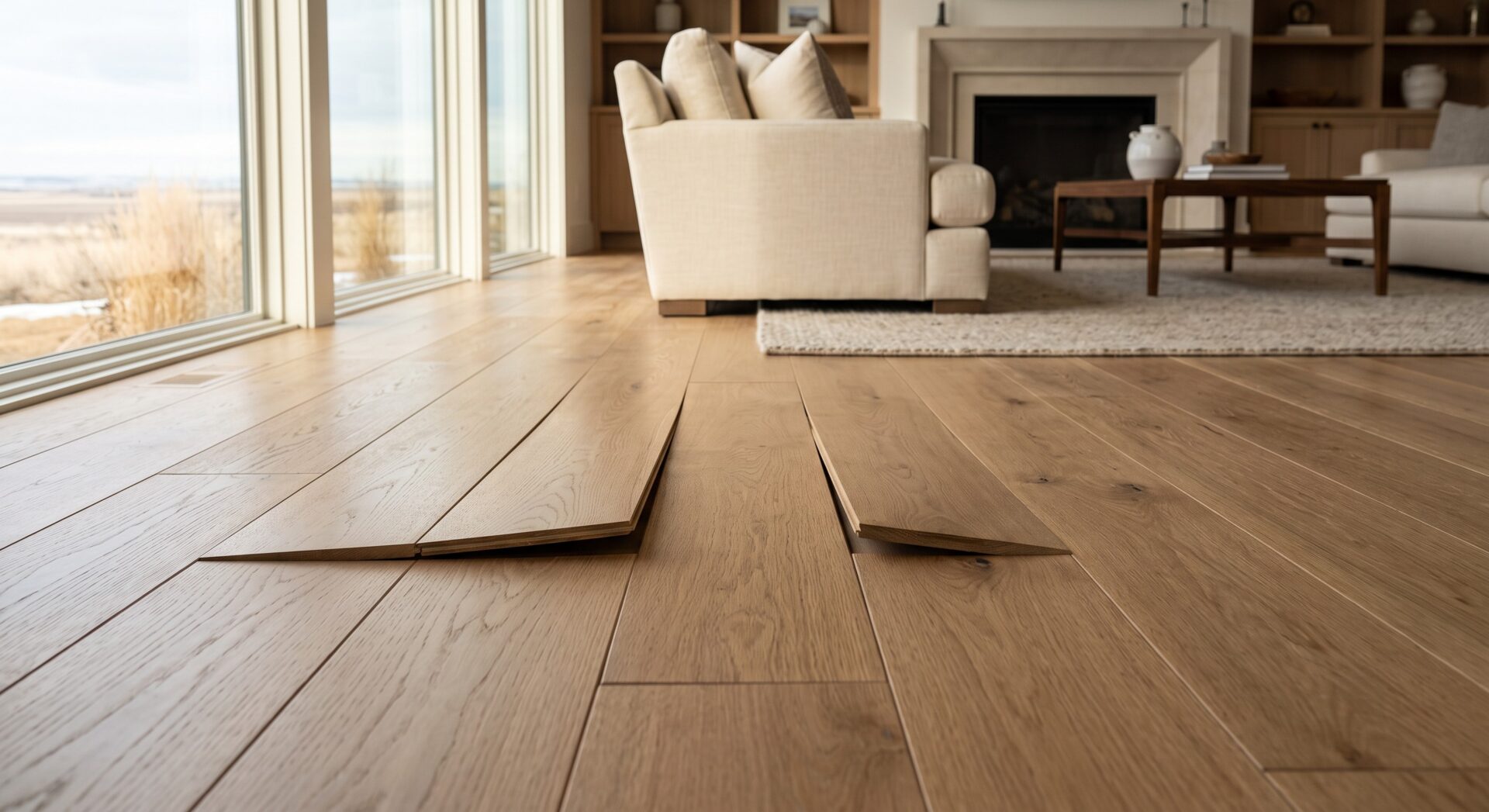
Can a Buckled Floor Be Fixed Without Replacing It?
Sometimes. Here is the honest answer.
If the buckle was caused by a temporary moisture event and the boards have not permanently deformed, stabilizing the room can allow the floor to flatten on its own. Bring interior humidity to a steady 35 to 50 percent, using a whole-house humidifier in winter and air conditioning in summer. Give it at least two to four weeks. Monitor with a moisture meter. Some mild buckles self-correct without touching a single board.
Here’s the thing: if the boards warped and did not flatten after humidity stabilized, the damage is structural. That section needs to come up.
More importantly, replacing the floor without finding and fixing the moisture source beneath it guarantees a repeat. We see this play out every spring in Great Falls. Homeowners have a floor installed over an untested subfloor, it buckles by February, they replace it the same way, and 18 months later the same call comes in.
“When customers come in after a buckle, the first question I ask is what the subfloor moisture reading was at installation. Most of the time, it was never tested. That one step prevents the callback.”
– Roger Linn, Flooring Specialist, Pierce Flooring Wholesale Direct
The National Wood Flooring Association recommends moisture-testing subfloor conditions before every hardwood installation. In Great Falls, that is not optional. If you are unsure whether your situation calls for a repair or a replacement, our team offers free in-home consultations. Call (406) 727-3832.
What to Replace It With, If Replacement Is the Right Call
If your solid hardwood has buckled more than once, or your subfloor has a persistent moisture issue, replacing it in kind may not solve anything.
Engineered hardwood is built in cross-ply layers specifically designed to resist the expansion and contraction that defeats solid wood. For Montana homes where chinook events and dry winters create year-round dimensional stress, engineered hardwood delivers the warmth and character of real wood with far greater stability. Brands like DuChateau and Kahrs, available at Pierce Flooring Wholesale Direct, are built for high-swing humidity environments and come in wide-plank, wire-brushed, and hand-scraped profiles that hold up well in older Great Falls homes. Explore the full hardwood collection at pierceflooringwholesale.com/flooring/hardwood/. And if the replacement feels like a big investment right now, ask us about 0% financing options when you visit.
Luxury vinyl plank is fully waterproof and has no moisture-related movement at all. If your subfloor has an ongoing moisture problem, or you are flooring a basement, mudroom, or bathroom-adjacent hallway, LVP removes the buckling risk entirely. Our write-up on flooring for Montana rental properties covers the moisture comparison in detail.
Neighborhoods like Riverview and Skyline Acres see a lot of older home construction with crawl spaces and incomplete vapor barriers. If that describes your house, a conversation about engineered hardwood or LVP is worth having before any new installation starts.
“I always have a good experience when I go to Pierce’s. Everyone is always very friendly and helpful. I would refer anyone to them.”
– Anonymous, Great Falls, MT

Before You Make Any Decision: Three Things to Do Right Now
Do not start pulling up boards yet.
Find the moisture source first. Is this a plumbing problem, subfloor vapor intrusion from snowmelt, or a humidity spike from a chinook? Fixing the floor without fixing the source guarantees the same outcome.
Let the room stabilize. Bring indoor humidity to 35 to 50 percent and give the floor at least two to four weeks. Single-event moisture buckles sometimes self-correct with just this step.
Get a professional assessment. A moisture meter and a few subfloor measurements tell you far more than a visual inspection. Pinless meters are quick for scanning; pin-type meters give precise readings for specific boards. The team at Pierce Flooring Wholesale Direct offers free in-home consultations and free measurements.
Stop in at 1204 7th St S in Great Falls, or call (406) 727-3832. Bring photos of the buckled area. Our specialists can often narrow down the cause before you visit the showroom. Learn more about the Pierce Promise and what it means for your flooring purchase.
Pro Tip from the Pierce Flooring Wholesale Direct Team in Great Falls:
Humidity control is the lowest-cost flooring protection you can invest in. Homes in Great Falls that run a whole-house humidifier in winter, keeping indoor relative humidity between 35 and 50 percent, see far fewer buckling, gapping, and cupping calls. Pick up a basic hygrometer for around $15 to monitor your home’s RH year-round; it will tell you exactly when your humidifier needs adjustment. The chinook events will still come. A stable interior environment gives your floor the resilience to handle them without lifting.
Frequently Asked Questions About Hardwood Floor Buckling
Why is my hardwood floor buckling in winter?
Great Falls winters regularly push indoor humidity below 25 percent, far lower than wood floors need to stay dimensionally stable. As the floor dries out rapidly and then rehydrates when a chinook event or spring humidity returns, the wood moves faster than expansion gaps or adhesives can accommodate. The result is cupping, crowning, or full buckling.
Can a buckled hardwood floor be fixed without replacement?
Sometimes. If the buckle is mild and the boards have not permanently warped, stabilizing interior humidity to 35 to 50 percent for at least two to four weeks can allow the floor to re-acclimate and flatten. If the boards have physically deformed and did not recover after humidity stabilized, that section typically requires replacement.
How do chinook winds affect hardwood floors in Great Falls?
Chinook winds collapse the room’s relative humidity within hours. The wood then releases moisture to equalize with the drier air over the following days. When humidity normalizes, it reabsorbs quickly. This repeated rapid cycling stresses wood beyond what standard expansion gaps were designed to handle.
What flooring resists buckling best in Great Falls homes?
Engineered hardwood is significantly more stable than solid wood under Montana’s humidity swings, due to its cross-ply construction that limits dimensional movement. Luxury vinyl plank is fully waterproof with no moisture-related expansion or contraction. For rooms with confirmed moisture exposure, LVP is the most reliable choice.
What indoor humidity level should I maintain to protect hardwood floors?
The National Wood Flooring Association recommends keeping interior relative humidity between 30 and 50 percent year-round for wood floors. In Great Falls, where winters routinely drop well below that range, a whole-house humidifier paired with a basic hygrometer for monitoring is the most practical solution.
You Might Also Like
-
- Flooring
October 9, 2026
Designing a Kitchen Backsplash with Great Falls’ Top Tile Brands
-
- Flooring
October 7, 2026
How to Choose Tile for Your Great Falls Kitchen Floor
-
- Flooring
September 16, 2026
Commercial Flooring in Great Falls: What Montana Businesses and Property Managers Need
Need Quality Flooring at Wholesale Prices?
Get in touch today and let’s find the right solution for your next project.