- Flooring
How to Choose Tile for Your Great Falls Kitchen Floor
October 7, 2026
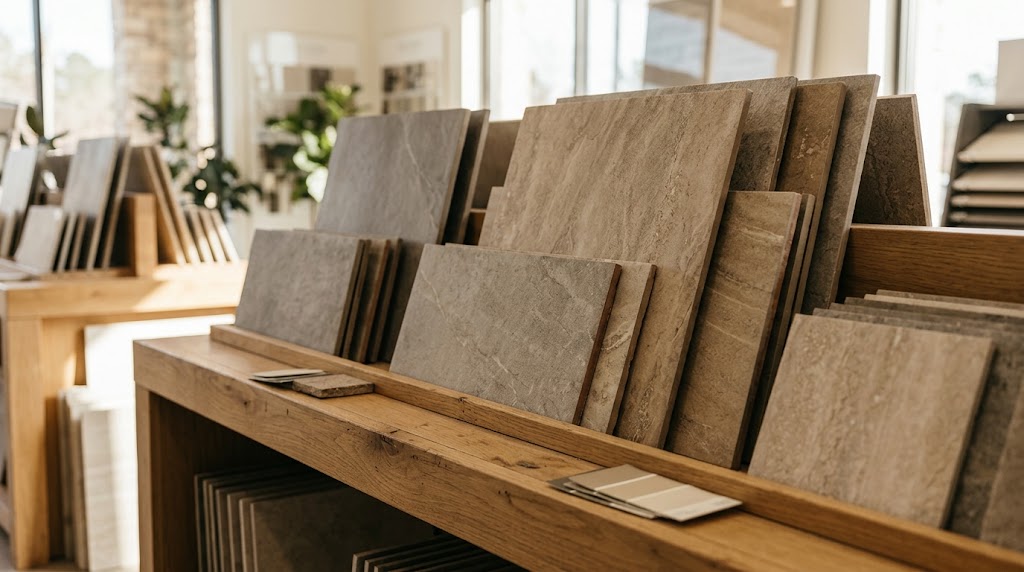
Kitchen tile is one of the most permanent decisions in a home remodel. Unlike carpet or LVP, which can be replaced in a day, kitchen floor tile is a multi-day project with a lifespan measured in decades. Get it right and it looks great through every phase of life your family goes through. Get it wrong and you are living with it for a long time.
Great Falls homeowners choosing kitchen floor tile face a specific set of considerations that most national buying guides do not address: cold floors in Montana winters, heavy outdoor traffic from a ranch and outdoor lifestyle, and a design aesthetic that trends toward open-plan living and large-format tile. This guide covers what to look for in kitchen floor tile Great Falls homeowners can trust to hold up, look right, and be practical to maintain. Pierce Flooring Wholesale Direct is at 1204 7th St S. Call (406) 727-3832 for a free design consultation.
Key Takeaways
- Kitchen floor tile must meet two ratings: PEI 3 or higher for abrasion resistance (PEI 4 recommended for heavy-traffic households) and DCOF 0.42 or higher per ANSI A137.1 for slip resistance in wet conditions.
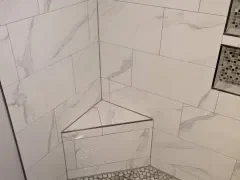
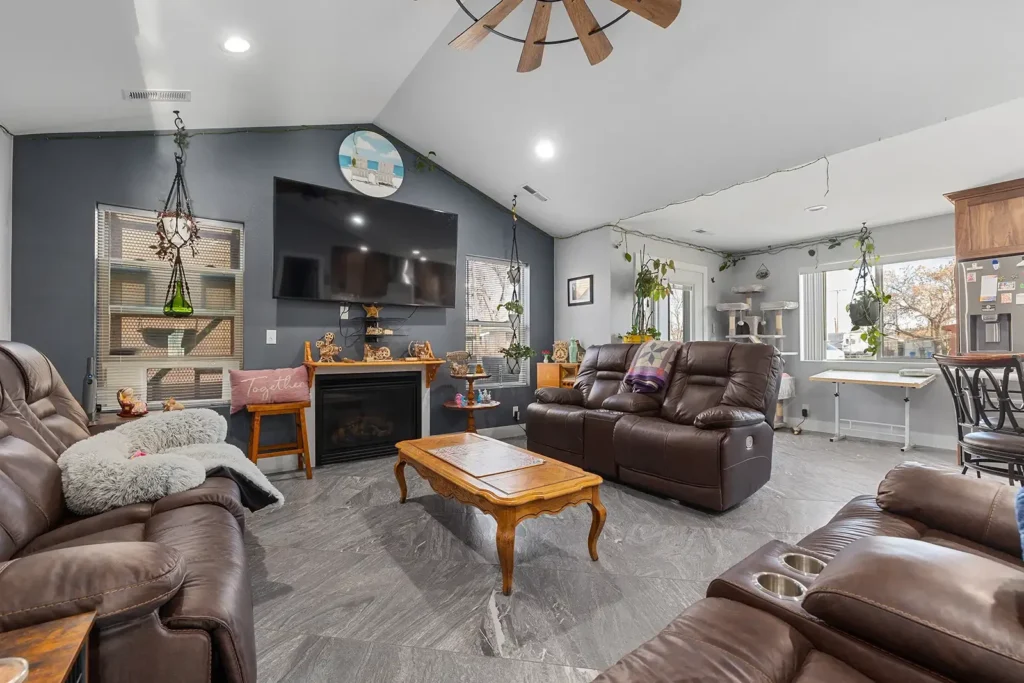
- Large-format porcelain tile (24×24, 12×24, or larger) is the dominant trend for Great Falls kitchens. Fewer grout lines mean less cleaning, and the wider planks suit the open-plan layouts and ranch/mountain aesthetic common in this market.
- Grout color is as important as tile color in a Montana kitchen. Medium to dark grout hides the tracking from boots and outdoor lifestyle that light grout shows immediately and requires constant cleaning.
- Large-format tile requires a flatter subfloor than smaller tile: ANSI A108.02 specifies a maximum 1/8-inch variation over 10 feet. An uncoupling membrane or self-leveling compound may be needed before installation.
- Pierce Flooring Wholesale Direct in Great Falls carries American Olean, Emser Tile, Florida Tile, and MSI tile lines and offers free design consultations and free in-home measurements for kitchen tile projects.
What Makes a Good Kitchen Floor Tile?
Two ratings tell you more about a tile’s performance than any aesthetic description: PEI (abrasion resistance) and DCOF (slip resistance).
PEI stands for Porcelain Enamel Institute and measures how well a tile’s surface resists abrasion from foot traffic. PEI ratings run from 0 to 5. PEI 0-2 is for walls. PEI 3 is the minimum for residential floors; it handles normal kitchen traffic. PEI 4 handles heavy residential and light commercial traffic, and is the better choice for Great Falls kitchens where boot traffic, pet activity, and active households are the norm. PEI 5 is reserved for heavy commercial applications.
DCOF (Dynamic Coefficient of Friction) measures slip resistance in wet conditions. ANSI A137.1 sets a minimum DCOF of 0.42 for level floor surfaces in residential and commercial wet conditions. Any tile specified for a kitchen floor should meet or exceed this threshold. Smooth, high-gloss tiles often fall below 0.42 when wet. Matte, textured, or lightly structured surfaces typically exceed it.
The practical rule: for a Great Falls kitchen, specify a porcelain or ceramic tile rated PEI 4 and DCOF 0.42 or higher, and confirm both numbers on the product data sheet before you commit.
“The two questions I always ask when a customer brings in a tile sample are: what is the PEI, and what is the DCOF? Those two numbers are the product rating story for a kitchen floor. If a salesperson cannot answer both questions, I would find a different source.”
– Phillip Mahoney, Flooring Specialist, Pierce Flooring Wholesale Direct
What Tile Size and Format Works Best in Great Falls Kitchens?
Large format is the answer for most Great Falls kitchens, and it is not just a trend choice. It is a maintenance decision.
Smaller tile formats, such as 4×4 or 6×6, create a grid of grout lines across the floor. Every one of those lines is a place where dirt, grease, and Montana boot-tracking accumulates. In a kitchen that sees heavy daily use, that grout network becomes a cleaning burden that homeowners underestimate when the tile goes in and regret within six months.
Large-format porcelain in 24×24, 12×24, or even 24×48-inch formats minimizes the grout line network dramatically. A 24×24 installation in a 200-square-foot kitchen has roughly a quarter of the grout line length of a 6×6 installation in the same space. Fewer grout lines means less surface area for soil to accumulate, easier mopping, and a floor that looks cleaner between deep cleans.
The one condition: large-format tile demands a flatter subfloor. ANSI A108.02 specifies a maximum variation of 1/8 inch over 10 feet for tiles with any dimension 15 inches or larger. Older Great Falls homes with wood subfloors or concrete that has shifted over time may need self-leveling compound or an uncoupling membrane before large-format tile can go down. Our team at Pierce Flooring Wholesale Direct checks subfloor conditions during free in-home measurements so that the spec is right before the tile is ordered.
For more on uncoupling membranes and what they do for tile on concrete or wood subfloors, our article on flooring for Great Falls basements covers the technical detail. Browse the full tile selection at pierceflooringwholesale.com/flooring/tile/.
“I always have a good experience when I go to Pierces. Everyone is always very friendly and helpful. I would refer anyone to them.”
– Anonymous, Great Falls, MT
How Does Montana’s Lifestyle Affect Kitchen Tile Choice?
Two things about Great Falls kitchens that most national buying guides miss: they are cold in winter, and they take Montana-level outdoor tracking from everyone in the household.
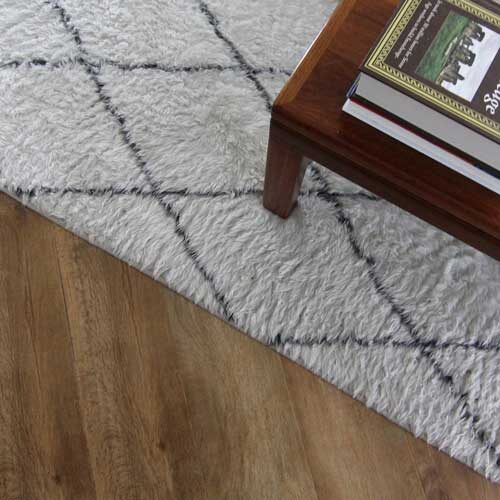
Tile is the coldest underfoot flooring material. In a Great Falls home where morning kitchen temperatures can drop significantly before the heating system brings the space up, bare feet on tile in January is genuinely uncomfortable. Two solutions: radiant floor heating beneath the tile, which is the most effective but adds cost and planning; or a well-chosen area rug or kitchen mat placed at the sink and prep areas, which is the pragmatic answer for most households. If radiant heat is planned, confirm the specific tile product’s compatibility with the system’s maximum temperature output before specifying.
For the tracking problem, the Montana answer comes down to two choices: tile color and grout color. Light-colored tile with white or light grout looks beautiful in a showroom and requires daily cleaning in a Great Falls kitchen. Medium to warm-toned tile in the gray, tan, or warm beige range, paired with a medium to dark grout, gives the floor the practical hiding power that Montana outdoor life demands. The tile still gets dirty. It just does not look dirty between mopping days.
“Very knowledgeable and experienced staff made purchasing bathroom tile and grout pretty easy. Very good products.”
– Anonymous, Great Falls, MT
What About Grout? The Decision Most Homeowners Underestimate
Grout is not a finishing detail. In a kitchen, it is a performance choice that determines how much time you spend cleaning the floor for the next 20 years.
Standard cement grout in a medium to dark color is the most common choice and works well if sealed properly and resealed every two to three years. Darker grout does not hide every stain but it significantly reduces the visual impact of the soil that accumulates between cleanings. For Great Falls kitchens with active households, dark gray or charcoal grout is a practical favorite.
Epoxy grout is the most stain-resistant option available. It does not require sealing, resists grease and household chemicals, and maintains its color far longer than cement grout. The limitation is installation: epoxy grout has a short working time, requires careful temperature and mixing management, and is very difficult to clean off tile surfaces if it dries before wiping. It requires an experienced installer. The result is worth the specification for high-use kitchen floors, but do not assume any installer is comfortable with it.
Grout joint width affects both aesthetics and maintenance. Narrow joints (1/8 inch or less) require unsanded grout and collect less debris. Wider joints (1/8 inch and above) require sanded grout and can collect more soil but give slight flexibility between tiles. Most large-format tile installations run 1/16 to 3/16-inch joints.
Our design team at Pierce Flooring Wholesale Direct walks through grout selection alongside tile selection as part of every free consultation. Call (406) 727-3832 or visit at 1204 7th St S. Learn about the Pierce Promise and what comes with every tile purchase.
Natural Stone vs. Porcelain for a Great Falls Kitchen Floor
Natural stone is beautiful. For Great Falls kitchen floors, it requires a realistic conversation about maintenance before homeowners commit.
Marble, travertine, limestone, and slate are all porous materials that absorb kitchen grease, cooking acids, and liquid stains if not sealed and maintained. Marble, in particular, is also relatively soft and scratches under heavy traffic. In a formal kitchen with light use and a homeowner committed to sealing the floor every one to two years, natural stone delivers an unmatched aesthetic. In a working Great Falls kitchen with active family use, it will show wear and staining that porcelain simply would not.
Porcelain tile made to mimic natural stone has reached a quality level where the visual difference is genuinely minimal. Brands like Emser Tile and Florida Tile, both available at Pierce Flooring Wholesale Direct, manufacture large-format porcelain with natural stone looks that carry PEI 4 ratings and DCOF values above 0.42. For most Great Falls kitchens, this is the practical recommendation: the look of stone with the performance of porcelain and without the sealing commitment.
Pro Tip from Pierce Flooring Wholesale Direct in Great Falls:
Order 10 to 15 percent more tile than your square footage calculation. Kitchen tile installations involve cuts at walls, around islands, and at appliance edges where waste is unavoidable. For large-format tile, the cut waste percentage is often higher because each cut tile is larger. More importantly, tile dye lots change between production runs. Replacement tile ordered a year after installation may not match the original. Having leftover tile from the original dye lot in storage protects you if a tile cracks or chips and needs replacement. Pierce Flooring Wholesale Direct can help you calculate the right overage for your specific kitchen layout during your free in-home measurement visit.
Frequently Asked Questions: Kitchen Floor Tile in Great Falls, MT
What is the best tile for a kitchen floor in Great Falls?
Large-format porcelain tile rated PEI 4 and DCOF 0.42 or higher is the best choice for most Great Falls kitchen floors. It handles heavy traffic, resists Montana outdoor tracking, requires less grout maintenance than smaller tile formats, and is available in natural stone looks that suit Montana ranch and mountain interior aesthetics. Pierce Flooring Wholesale Direct carries American Olean, Emser Tile, Florida Tile, and MSI tile lines.
What is a PEI rating and why does it matter for kitchen tile?
PEI (Porcelain Enamel Institute) rates a tile’s resistance to abrasion from foot traffic, on a scale from 0 to 5. PEI 0-2 is for walls only. PEI 3 handles normal residential floors. PEI 4 handles heavy residential and light commercial traffic and is the recommended minimum for an active Great Falls kitchen. PEI 5 is for heavy commercial applications.
How often does kitchen floor tile grout need to be sealed in a Montana home?
Standard cement grout in a kitchen should be sealed every two to three years, and immediately after installation. Grout in a Great Falls kitchen faces cooking grease, heavy foot traffic, and Montana outdoor tracking that accelerates soiling. Epoxy grout does not require sealing and is the most stain-resistant option, but requires an experienced installer due to its short working time and difficult cleanup.
Can I install radiant floor heating under kitchen tile in Great Falls?
Yes. Porcelain and ceramic tile are among the best flooring materials for use with radiant heating because they conduct and retain heat efficiently. Confirm the specific tile product’s compatibility with the maximum floor surface temperature of your radiant system. Most residential radiant systems operate well within the compatibility range of quality porcelain tile. Natural stone and epoxy grout also work with most radiant systems.
Does Pierce Flooring Wholesale Direct offer design consultations for kitchen tile projects?
Yes. Pierce Flooring Wholesale Direct in Great Falls offers free design consultations and free in-home measurements for kitchen tile projects. The team helps with tile selection, grout color and type, format sizing for the specific kitchen layout, and subfloor assessment to confirm whether large-format tile can be installed directly or whether preparation is needed. Call (406) 727-3832 or visit 1204 7th St S.
You Might Also Like
-
- Flooring
October 9, 2026
Designing a Kitchen Backsplash with Great Falls’ Top Tile Brands
-
- Flooring
September 16, 2026
Commercial Flooring in Great Falls: What Montana Businesses and Property Managers Need
-
- Flooring
August 26, 2026
Best Flooring for Great Falls Basements: Moisture, Climate, and What Actually Works
Need Quality Flooring at Wholesale Prices?
Get in touch today and let’s find the right solution for your next project.